

Article: Lab-Grown Diamond Engagement Ring Buying Guide
Lab-Grown Diamond Engagement Ring Buying Guide

You want a ring they will love putting on every morning. Choosing it should not mean guessing what a grading report says or wondering whether you ordered the right size.
This guide helps you buy a lab-grown diamond engagement ring in Canada with a clear plan. Learn how to compare diamonds, choose a setting, understand your metal options and prepare for your proposal.
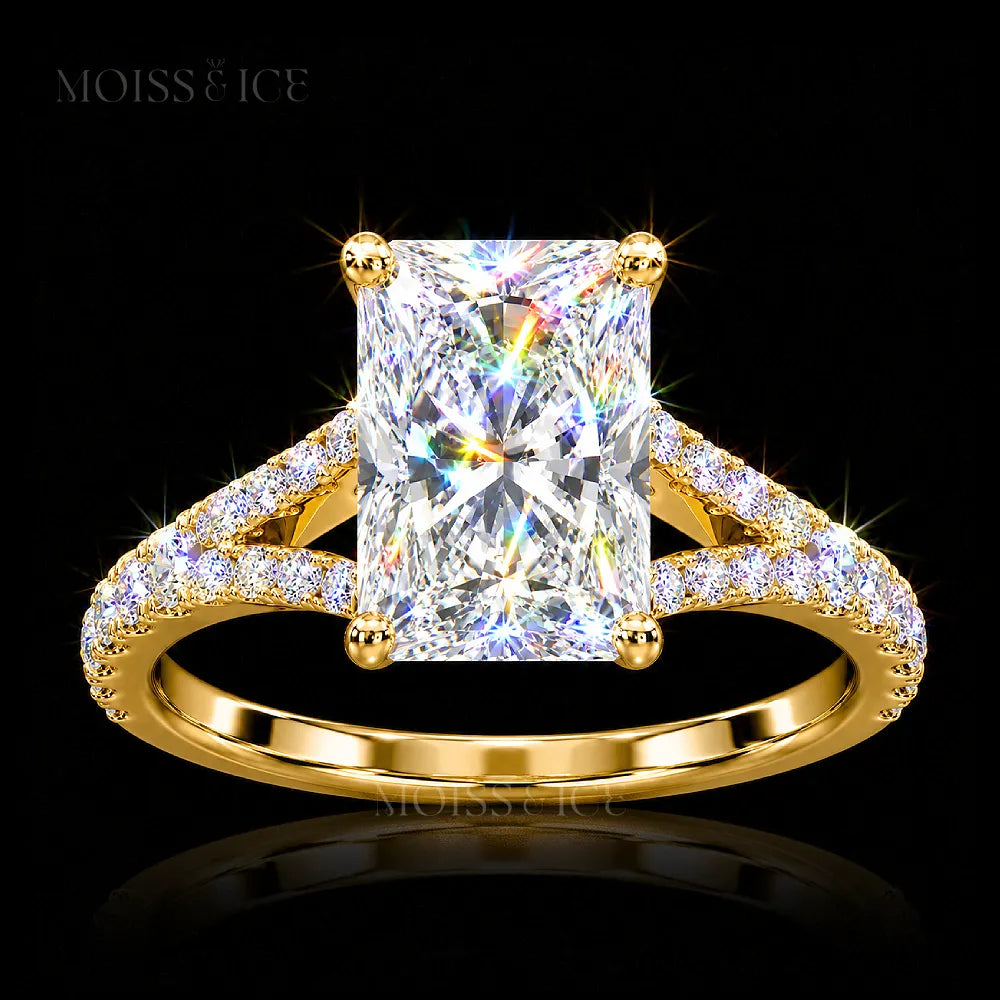
At MOISS & ICE, our lab-grown diamond engagement rings feature E Color, VVS2 clarity and an official IGI grading report for the centre diamond. Choose from Solid 14K Gold or 18K Gold Plated premium 925 silver, depending on the design.
Shop Lab-Grown Diamond Engagement Rings
What Is a Lab-Grown Diamond?
A lab-grown diamond is a real diamond created under controlled laboratory conditions. It has the same carbon crystal structure and essentially the same physical and optical properties as a mined diamond. The main difference is where it grows.
You may also see the terms lab-created diamond or laboratory-grown diamond. These describe the same category of diamond.
Two common growth methods are HPHT, which stands for high pressure, high temperature, and CVD, which stands for chemical vapour deposition. The growth method alone does not tell you the quality of the finished stone. Compare the individual diamond’s report, measurements and appearance.
Are Lab-Grown Diamonds the Same as Moissanite?
No. Moissanite is a different gemstone made from silicon carbide. Both are popular engagement ring choices, but they have different properties and light patterns.
If you want a diamond specifically, choose a lab-grown diamond. If you are open to another gemstone, compare our moissanite engagement rings alongside the lab diamond collection.
How Much Should You Spend on a Lab-Grown Diamond Engagement Ring?

Start with an amount you feel comfortable spending. There is no salary rule you need to follow, and the price of your ring does not measure the strength of your commitment.
Budget for the finished ring, including tax. Consider whether you also need a wedding band and whether you want separate jewellery insurance.
What Determines the Price?
The price of a lab-grown diamond engagement ring depends on several details:
- Diamond weight: larger centre diamonds generally cost more.
- Diamond quality: colour, clarity, cut information and other grading details affect comparisons.
- Diamond shape: different shapes can carry different prices.
- Metal: Solid 14K Gold and gold-plated silver have different material costs.
- Setting: accent stones, band design and construction affect the finished price.
- Ring size and custom requests: check the price after selecting your exact options.
Before comparing two rings, confirm whether each price includes the centre diamond, setting and any matching band. A setting-only price is not comparable to the price of a complete ring.
A practical approach: choose your preferred metal and shape first. Then compare two nearby carat weights within your budget.
Understanding the Diamond 4Cs

The 4Cs are carat, cut, colour and clarity. Each describes a different part of the diamond. Together, they help you compare stones beyond a product photograph.
Carat: Diamond Weight, Not Width
One carat equals 0.2 grams. Carat measures weight, not how wide a diamond looks on your finger.
Compare the diamond’s measurements in millimetres as well as its carat weight. Two diamonds with the same weight can have different dimensions because of their shape and proportions.
Centre-Stone Weight vs. Total Carat Weight
Centre-stone weight refers to the main diamond. Total carat weight adds together the diamonds included in the stated total.
A ring with a 2-carat centre diamond is different from a ring with 2 carats spread across its centre and accent stones. Check which measurement the listing uses.
Cut: How the Diamond Handles Light
Cut concerns the diamond’s proportions and finish. Shape describes its outline, such as oval, pear or princess.
When comparing rings, look beyond a still photograph. Ask for clear video showing the diamond moving so you can see how its light pattern changes.
Read the actual grading report. Excellent polish and symmetry are separate assessments and do not automatically establish an overall Excellent cut grade. The cut information provided can vary by diamond shape and report type.
Colour: What Does E Color Mean?
On the D-to-Z diamond colour scale, E falls within the colourless range.
MOISS & ICE lab-grown diamond engagement rings feature E Color diamonds paired with VVS2 clarity and official IGI certification. This gives you a clear quality standard while you compare designs.
Clarity: What Does VVS2 Mean for Your Choice?
VVS2 is a high diamond clarity grade. Our lab-grown diamonds pair this grade with E Color and an official IGI report.
Clarity is one part of the decision. Also compare the diamond’s measurements, proportions and appearance rather than choosing by one grade alone.
Which Diamond Shape Should You Choose?

Start with the jewellery your partner already wears. Do they prefer clean lines, soft curves or a design that draws attention? Their saved photos and everyday style can tell you more than a trend list.
| Shape | Overall Look | What to Compare |
|---|---|---|
| Round | A circular outline that suits many settings. | Diameter and documented cut quality. |
| Oval | Soft curves with an elongated outline. | Length-to-width ratio and appearance in motion. |
| Marquise | A long outline with two pointed ends. | Proportions, tip protection and how it sits on the hand. |
| Pear | A rounded end that narrows to a point. | Outline, orientation and protection around the tip. |
| Princess | A square outline with pointed corners. | Corner protection and the balance of the setting. |
| Radiant | A square or rectangular outline with trimmed corners. | Measurements, proportions and light pattern. |
Compare Proportions, Not Just Shape Names
Two oval diamonds can look quite different. One may be longer and narrower, while another looks fuller.
Divide the diamond’s length by its width to compare its proportions. A higher length-to-width ratio means a longer, narrower outline. Your preferred look matters more than finding one supposedly perfect ratio.
Look at Elongated Diamonds in Motion
Oval, pear and marquise diamonds can display a darker pattern across the centre, often called a bow tie. Look at how that pattern changes as the diamond moves. A single photograph cannot show its full appearance.
For design ideas, compare the marquise Amaira Lab-Grown Diamond Engagement Ring, the pear-shaped Shakti Lab-Grown Diamond Engagement Ring and the princess-cut Indira Lab-Grown Diamond Engagement Ring.
Choose an Engagement Ring Setting That Fits Daily Life
The setting affects how your ring looks, feels and fits beside a wedding band. Think about the wearer’s routine as well as their style.
Solitaire Settings
A solitaire keeps the centre stone as the main focus. It is a useful starting point if your partner prefers a simpler design.
Pavé Bands
A pavé band adds smaller stones along the ring. It brings extra sparkle, along with more individual settings to care for.
Hidden Halo Settings
A hidden halo adds detail beneath the centre stone. It is most noticeable from the side, making side-view photographs especially useful when comparing designs.
Bridal Sets
A bridal set pairs an engagement ring with a coordinating band. Confirm exactly which pieces are included in the price.
Check Setting Height and Wedding Band Fit
Ask how high the centre stone sits and whether a straight wedding band can sit beside it without a gap. A lower setting does not always allow a band to sit flush.
If the wearer regularly uses gloves or works with their hands, ask how the setting may fit into that routine. Pointed diamonds also need appropriate protection around their tips or corners.
Solid 14K Gold or 18K Gold Plated Silver?

These options have different prices and maintenance needs. The gold number alone does not make them directly comparable.
Solid 14K Gold
Solid 14K Gold contains 58.5% gold mixed with other metals. It is our recommended starting point for an engagement ring intended for regular daily wear.
Solid gold still needs care. It can scratch, and white gold may need rhodium renewal over time.
18K Gold Plated Premium 925 Silver
This option combines a premium 925 silver base with an 18K gold surface finish. It offers a lower starting price, but the finish can wear and may require replating.
Moisture, chemicals, friction and care habits affect the lifespan of the finish. Choose this option with those maintenance needs in mind.
Review our Limited Lifetime Warranty and gold finish coverage before choosing your metal.
What Does Your IGI Diamond Report Tell You?
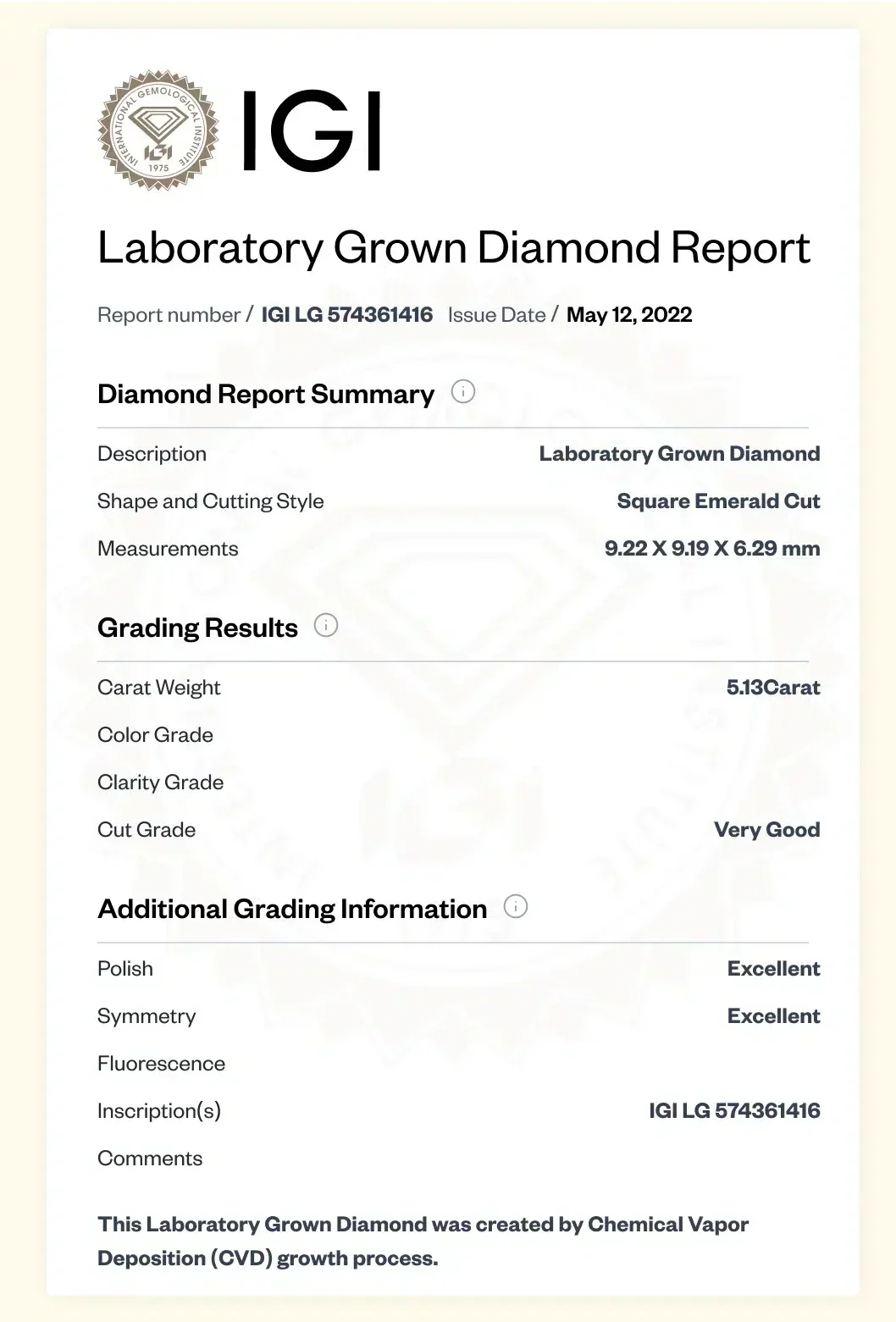
An IGI Laboratory Grown Diamond Report independently identifies and grades the diamond. It provides documented information about the stone rather than relying only on the retailer’s description.

When reviewing your report:
- Find the report number and verify it through IGI’s report-check service.
- Confirm that the diamond is identified as laboratory-grown.
- Compare its shape, measurements and carat weight with the listing.
- Check the colour and clarity grades.
- Review the available cut, polish, symmetry and other grading details.
- Confirm which stone the report covers if the ring contains multiple diamonds.
If the report records a laser inscription, a qualified jeweller can help match it to the diamond. You should not expect to read it without magnification.
A grading report is different from a valuation, insurance policy or retailer warranty. It does not guarantee future resale value.
Read our guide to IGI diamond certification for a closer look at the document.
How to Find the Right Engagement Ring Size
A professional ring sizer is a useful first choice. If you measure at home, repeat the measurement at different times rather than relying on one reading.
Band width matters too. A wider band can feel tighter than a narrow band in the same size.
Planning a surprise? An existing ring only helps if it fits the intended finger. A ring worn on the other hand may fit differently.
MOISS & ICE engagement rings are available in US sizes 3–10, including half sizes, with custom sizes available on request. Check your selected design’s options and confirm sizing before ordering. Do not assume resizing will be available after purchase.
Follow our at-home ring size guide or contact us for sizing help.
Production, Delivery, Returns and Ring Care
How Long Will Your Ring Take?
Our lab-grown diamond engagement rings are made to order. Allow approximately 10–15 business days for production, followed by shipping time to your address.
We provide free insured shipping across Canada and the USA. Check your selected product and our shipping policy for current details.
If you have a proposal date planned, contact us before ordering. Production and transit are separate stages, so leave room for delays rather than planning around the earliest possible arrival.
Can You Return a Made-to-Order Ring?
Standard made-to-order pieces may qualify for return under our policy. Eligible change-of-mind returns require contact within 30 days of delivery and carry a 25% restocking fee.
Custom and personalized pieces are final sale, except where an incorrect, damaged or defective item is confirmed. This distinction matters if you request a size or modification outside the listed options.
Read the full return, exchange and cancellation policy before placing your order.
How Should You Care for Your Engagement Ring?
A diamond’s resistance to scratching does not make the finished ring immune to damage. Remove it for heavy lifting, swimming and household cleaning.
Store your ring separately from other jewellery. Follow the care instructions for its metal, especially for plated finishes. If a stone feels loose or the setting appears damaged, stop wearing it until it has been checked.
Review your warranty coverage and consider whether you want separate insurance for loss or theft.
Your Lab-Grown Diamond Engagement Ring Buying Checklist
- I have compared the final ring price, including tax.
- I know the centre-stone weight and what any total carat figure includes.
- I have checked the diamond’s measurements and grading information.
- I understand the metal and its care requirements.
- The setting suits the wearer’s routine.
- I have considered how a wedding band will fit beside the ring.
- I have confirmed the ring size and any custom-order conditions.
- I understand the production estimate, shipping, returns and warranty.
Find a Ring That Feels Right for Your Proposal
You do not need to know every diamond term to choose well. You need clear information, a comfortable budget and a design that feels right for the person wearing it.
Browse our IGI-certified lab-grown diamond engagement rings, featuring E Color and VVS2 clarity, or ask MOISS & ICE for help comparing your shortlist.